Well Control, Causes of Kicks
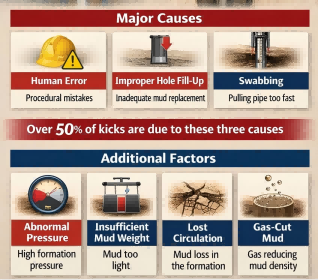
A kick in drilling operations occurs when the formation pressure exceeds the hydrostatic pressure of the drilling mud, causing formation fluids to flow into the wellbore. This imbalance is a critical well control issue that can escalate into a blowout if not managed promptly and effectively. The causes of kicks can be grouped into several categories. The most common are human error, improper hole fill-up during trips, and swabbing due to rapid pipe movement. Together, these account for more than half of all kick incidents, underscoring the importance of strict adherence to procedures, careful monitoring, and operator training.
Other contributing factors include abnormal formation pressure, which naturally exceeds mud weight, insufficient mud density, where the fluid column fails to balance reservoir pressure lost circulation, which reduces hydrostatic head by allowing mud to escape into weak formations and gas-cut mud, where entrained gas lowers effective mud density and weakens pressure control.
In short, while geological conditions play a role, the majority of kicks stem from operational lapses. Effective well control therefore depends not only on proper mud design but also on disciplined practices, vigilant monitoring, and minimizing human error.