Dogleg Severity (DLS)
One of the most important numbers in directional drilling
Every directional driller watches inclination and azimuth, but one parameter often tells the real story of what is happening downhole: Dogleg Severity(DLS)
DLS measures how rapidly the wellbore changes direction, combing changes in both inclination and azimuth. It is commonly expressed as degrees per 100ft or degrees per 30m.
Why does is matter?
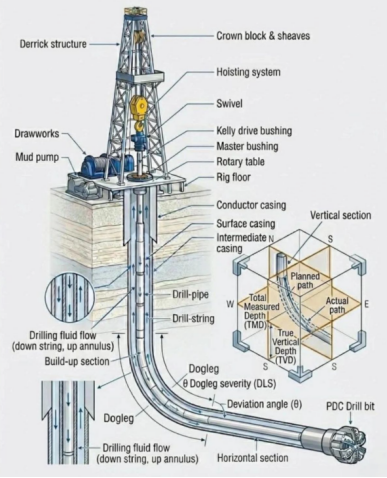
High DLS increases stress on drill pipe, BHA components, and casing.
Excessive doglegs can lead to torque and drag issues, making it harder to reach target depth.
Severe dogleg may reduce tool life, increase vibration, and raise the risk of fatigue failures.
Proper DLS management helps ensure smoother well trajectories, better hole quality, and safer drilling operations.
A low DLS generally indicates a smooth, gradual well path, while a high DLS means the wellbore is changing direction aggressively over a short distance. In modern directional drilling, achieving the target is important but reaching it with a controlled and efficient wellbore is what separates good drilling from great drilling.