Where Drilling Ends and Real Production Begins
From drilling a hole to delivering a safe, sustainable producer-that’s the essence of well completion.
Why do we need completion at all?
1, The purpose: producing directly from casing damages it and is costly to replace. The solution: run production tubing+production packer to isolate the casing, force flow through tubing, ensure controlled production via choke and X-mass tree, and prevent crossflow between zones with different pressures using multiple packers.
2, Mud vs. Brine-Protecting the reservoir: a crucial concept we deep-dived:
Mud: Higher formation damage risk(solid invasion),excellent for hole cleaning during drilling.
Brine: low solid, formation-friendly, density adjusted by salt concentration. Ideal for completion/cleanout to avoid plugging perforations.
3, Well preparation & equipment: the complete pre-completion workflow: circulation-scraping run(bit+scraper+brush+magnet)-dilution-chemical pill sequence(gel pill-caustic soda-detergent-gel-brine) to achieve a clean, solids-free wellbore verified by mud balance & turbidity meter(<20NTU)
And the completion string itself: wireline entry guide, RN No-go Nipple & R-Nipple(to prevent tool loss), permanent packer setting & pressure testing, SSD(sliding sleeve door) for zonal control, tubing hanger, and X-mass tree with master & wing valves. We even compared workover rig vs drilling rig-same concept, different horse power for heavy lifting and precise equipment handling.
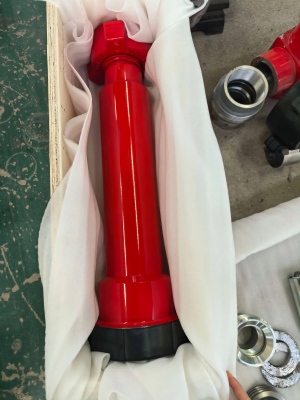
We inspected real completion equipment, saw a workover rig on site, and witnessed how the completion string is assembled and run-from the shifting tools that open/close SSDs to how a packer is set 100% leak-free.
This experience connected the dots between wellbore integrity, formation protection, and optimized production.