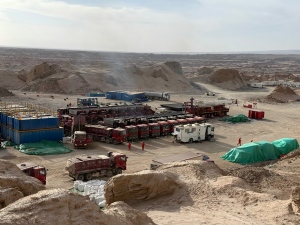
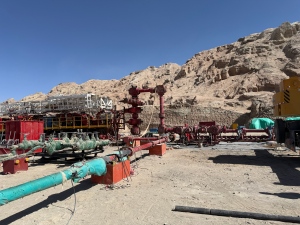
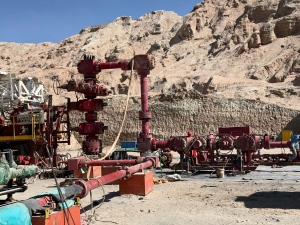
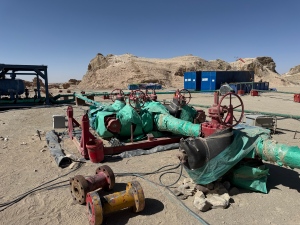
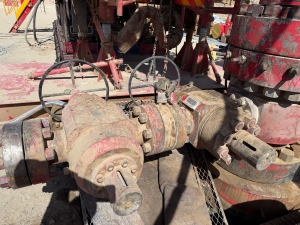
Hydraulic fracturing is a production enhancement technology that uses high-pressure fluid to create fractures in underground rock formations to improve oil & gas permeability.
Basic Principle:
Hydraulic fracturing uses a surface high-pressure pump unit to inject fracturing fluid into the wellbore. When the bottom-hole pressure exceeds the tensile strength of the formation rock, fractures are created. Subsequently, a proppant-carrying fluid(a mixture of fracturing fluid and proppant) is injected, propelling the fracture forward and filling it with proppant, forming a highly conductive channel. This reduces bottom-hole flow resistance and increases Oil & gas production or water injection. Fracture formation and extension are influenced by in-situ stress, rock mechanical properties, fracturing fluid performance, and injection method.
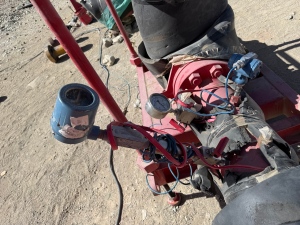
Fracturing Fluid and Propane:
Fracturing fluid is typically a high-viscosity liquid that carries proppant(such as sand or ceramsite). The proppant keeps the fracture open after it closes. Modern processes emphasize low-filtration-loss fracturing fluids and high-comprehensive-strength proppant to ensure fracture stability and high conductivity.
Reasons for Hydraulic Fracturing
Under natural conditions, most oil & gas wells fail to achieve optimal production levels, while hydraulic fracturing can solve various problems affecting efficient production. Radial flow from the reservoir to the wellbore is not an efficient flow pattern. As fluid approaches the wellbore, it must traverse progressively smaller areas. This leads to fluid “clogging” and reduced flow. If the well construction can be designed to make radial flow almost linear, the change in flow pattern will improve well productivity. A well-designed and executed hydraulic fracture can transform the flow from radial to near-linear. In most formations, near-wellbore permeability decreases due to drilling, cementing and completion operations. Theoretically, this decrease in permeability can be demonstrated to lead to a significantly drop in production. Hydraulic fracturing extends the wellbore beyond the damaged area and mitigates its impact on production. Hydraulic fracturing extends the wellbore deeper into the formation. Therefore, production activities are controlled based on the characteristics of the average reservoir reached by the fracture, rather than being confined to a smaller near-wellbore zone.